Close Menu
    What's Hot

    Right to Work: Fundamental Right or Constitutional Aspiration?

    August 21, 2026

    Police Cannot Investigate PCPNDT Act Offences

    August 21, 2026

    Right to Marry Is a Human Right

    August 21, 2026
    Facebook X (Twitter) Instagram
    Trending
    • Right to Work: Fundamental Right or Constitutional Aspiration?
    • Police Cannot Investigate PCPNDT Act Offences
    • Right to Marry Is a Human Right
    • DOG EVIDENCE NOT ENOUGH
    • RITUALS BEFORE REGISTRATION MATTER
    • THE DIGITAL ARREST
    • LOVE IN THE AGE OF AI
    • when TREES become CITIZENS
    Facebook X (Twitter) Instagram
    Legal MitraLegal Mitra
    Demo
    • Home
    • Editorials
    • Articles Category
      • Law Focus
      • Law to Life
      • Law Tech
      • Cover Story
      • HOUMOUR
      • Legal Desk
      • International
      • Matrimony
      • Women
      • Cyber Crime
    • Magazine Issues
    • Authors
    Legal MitraLegal Mitra
    Home » News » Power Lines vs Survival
    Featured

    Power Lines vs Survival

    Why the Great Indian Bustard Reached the Supreme Court
    Facebook Twitter Pinterest LinkedIn Telegram Tumblr Email
    Share
    Facebook Twitter LinkedIn Pinterest Email

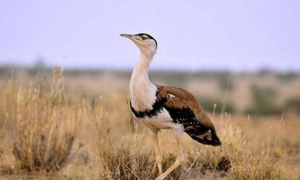
    A critically endangered bird forced India’s top court to confront an inconvenient reality—clean energy expansion, when poorly planned, can become a direct threat to survival.

    A Species on the Brink

    The Great Indian Bustard, one of the heaviest flying birds in the world, now survives in alarmingly low numbers, largely confined to Rajasthan’s desert ecosystem. Its decline is not accidental but the result of sustained habitat disruption and infrastructure intrusion. With poor frontal vision and a bulky body that limits agility, the bird is particularly vulnerable to overhead power lines, turning energy infrastructure into a lethal hazard rather than a neutral presence.

    How the Dispute Reached the Court

    The issue reached the Supreme Court of India through a petition highlighting repeated bird deaths caused by collisions with transmission lines linked to renewable energy projects in Rajasthan and Gujarat. What should have been addressed at the planning stage escalated into litigation because preventive action was never taken. The Court was essentially asked to step in where policy had failed.

    The Clash Between Clean Energy and Conservation

    At the heart of the case lay a difficult conflict. On one side was India’s aggressive push toward renewable energy, particularly solar and wind projects concentrated in desert regions. On the other was the survival of a species whose core habitat overlaps almost exactly with these energy zones. The problem wasn’t energy expansion itself but the absence of ecological foresight. Infrastructure had been laid first, and environmental consequences were considered later—an approach that predictably led to crisis.

    ALSO READ

    After a Decade in Coma, Supreme Court Allows Withdrawal of Life Support
    From Blanket Ban to Targeted Strategy

    In its earlier 2021 order, the Court had imposed a sweeping restriction on overhead power lines across vast stretches of bustard habitat and pushed for undergrounding. However, this approach soon ran into practical limitations, including high costs and technical feasibility issues. Recognizing this, the Court modified its stance in 2024 and shifted toward a more calibrated, evidence-based strategy guided by expert recommendations.

    Redrawing Conservation Boundaries

    The Court approved revised priority conservation areas, expanding protected zones in both Rajasthan and Gujarat. These areas were identified as critical breeding and survival habitats. However, even this process sparked controversy, with certain ecologically important corridors being excluded, raising concerns about whether conservation mapping was still falling short of ground realities.

    Regulating Power Infrastructure

    Instead of an outright ban, the Court introduced structured regulation of power lines. New overhead lines were largely prohibited within priority areas, while existing lines were to be either undergrounded or rerouted. Dedicated powerline corridors were created to consolidate infrastructure into defined stretches, reducing scattered risk across habitats. This marked a shift from reactive mitigation to planned risk reduction.

    Restrictions on Renewable Projects

    The judgment imposed clear limits on future development within critical habitats. New wind turbines, large solar plants, and expansion of existing projects were restricted in priority zones. This was a significant move, signaling that renewable energy projects would no longer receive unchecked approval simply because they are environmentally branded as “green.”

    Scientific Approach Over Assumptions

    Notably, the Court refrained from mandating widespread use of bird flight diverters without conclusive evidence of their effectiveness. Instead, it directed further scientific evaluation, emphasizing that conservation measures must be grounded in proven results rather than assumptions or symbolic compliance.

    Strengthening Ground-Level Conservation

    Beyond infrastructure control, the Court emphasized habitat restoration and active conservation. In Rajasthan, this included grassland recovery, predator management, and protection of breeding zones. In Gujarat, innovative methods like “jump-start” breeding—transferring fertile eggs to be raised in natural conditions—were encouraged, along with GPS-based monitoring to track and protect the remaining population.

    The Larger Failure Behind the Case

    The case ultimately exposes a deeper systemic flaw. The decline of the Great Indian Bustard is not a sudden crisis but the outcome of long-term neglect and poor planning. Development and conservation were treated as separate silos, leading to predictable conflict. The Court’s intervention is essentially corrective, not preventive—addressing damage that should never have been allowed in the first place.

    Why This Judgment Matters

    This ruling goes beyond a single species. It sets a precedent that even renewable energy projects must pass ecological scrutiny and cannot override biodiversity concerns. It also reinforces a fundamental point: sustainability is not achieved by replacing one form of harm with another. If environmental planning continues to ignore ecological realities, similar conflicts will keep emerging, with courts stepping in only after irreversible damage has already been done.

    READ MORE

    VIRTUAL CRIMES

    Subscribe Us 

    Facebook Twitter Youtube

    We strive to make a lasting impact on India’s policy and planning landscape through fair, unbiased, and incisive research based journalism. 
    But we can’t do it alone.
    Together, we can create a better India, where policies are fair, planning is unbiased, and the truth prevails. Your contribution matters, and we shall be immensely grateful for your support.

    Support LegalMitra
    flying birds heaviest flying birds Indian Bustard Supreme Court
    Share. Facebook Twitter Pinterest LinkedIn Tumblr Email

    Related Posts

    Right to Work: Fundamental Right or Constitutional Aspiration?

    August 21, 2026

    Police Cannot Investigate PCPNDT Act Offences

    August 21, 2026

    Right to Marry Is a Human Right

    August 21, 2026

    HC Orders Immediate Steps to Save Sonam Wangchuk’s Life

    July 16, 2026

    ‘Mahaprabhu Jagannath’ Makers Move SC Against HC Ban Ahead of Release

    July 16, 2026

    SC Stays Madras HC’s Blanket Ban on Cow Slaughter in Tamil Nadu

    July 16, 2026
    Leave A Reply Cancel Reply

    Top Posts

    No Maintenance for Working Wife, Rules Supreme Court

    March 22, 2025344 Views

    The Fasli Year

    July 13, 2023272 Views

    HANUMAN’S JOURNEY OF GUIDANCE

    June 24, 2023165 Views
    Categories
    • Agastya Sharma (2)
    • August 2023 (19)
    • August 2024 (7)
    • Cover Story (22)
    • Cyber Crime (3)
    • Digital Classics (3)
    • Editorial (7)
    • Featured (61)
    • Featured Videos (3)
    • Feb-March 2024 (23)
    • Feb-March 2026 (3)
    • February 2024 (2)
    • Gadgets (1)
    • HOUMOUR (4)
    • International (14)
    • January 2024 (27)
    • June – July 2024 (38)
    • June 2025 (7)
    • June-2023 (10)
    • June-July 2026 (7)
    • Khushboo Sharma (2)
    • Latest in Tech (3)
    • Law Focus (15)
    • Law Medics (2)
    • Law Tech (8)
    • Law to Life (44)
    • Legal Desk (6)
    • Legal Mitra – E Magazine (1)
    • Maarisha Sharma (1)
    • March 2025 (11)
    • May-2023 (16)
    • Most Recent (146)
    • New Arrivals (69)
    • News (60)
    • November 2024 (6)
    • Oct-Nov 2025 (10)
    • October 2023 (8)
    • October 2024 (9)
    • riteBOL (97)
    • Ritesh Sharma, Editor (26)
    • Shipra Sharma (3)
    • Tech & Work (1)
    • Todays Picks (1)
    • Trending (6)
    • Uncategorized (5)
    • Women (8)
    Don't Miss

    Right to Work: Fundamental Right or Constitutional Aspiration?

    The Supreme Court has raised a larger constitutional question over whether the statutory right to…

    Police Cannot Investigate PCPNDT Act Offences

    August 21, 2026

    Right to Marry Is a Human Right

    August 21, 2026

    DOG EVIDENCE NOT ENOUGH

    July 17, 2026
    Stay In Touch
    • Facebook
    • YouTube
    • TikTok
    • WhatsApp
    • Twitter
    • Instagram
    Most Popular

    No Maintenance for Working Wife, Rules Supreme Court

    March 22, 2025344 Views

    The Fasli Year

    July 13, 2023272 Views

    HANUMAN’S JOURNEY OF GUIDANCE

    June 24, 2023165 Views
    Our Picks

    Right to Work: Fundamental Right or Constitutional Aspiration?

    August 21, 2026

    Police Cannot Investigate PCPNDT Act Offences

    August 21, 2026

    Right to Marry Is a Human Right

    August 21, 2026
    Legal Mitra
    Facebook X (Twitter) Instagram YouTube
    • Home
    • About Legal Mitra
    • Editorials
    • Article Categories
    • Contact Us
    © 2026 Legal Mitra. Designed by CREADIG.

    Type above and press Enter to search. Press Esc to cancel.

    Go to mobile version