Close Menu
    What's Hot

    Right to Work: Fundamental Right or Constitutional Aspiration?

    August 21, 2026

    Police Cannot Investigate PCPNDT Act Offences

    August 21, 2026

    Right to Marry Is a Human Right

    August 21, 2026
    Facebook X (Twitter) Instagram
    Trending
    • Right to Work: Fundamental Right or Constitutional Aspiration?
    • Police Cannot Investigate PCPNDT Act Offences
    • Right to Marry Is a Human Right
    • DOG EVIDENCE NOT ENOUGH
    • RITUALS BEFORE REGISTRATION MATTER
    • THE DIGITAL ARREST
    • LOVE IN THE AGE OF AI
    • when TREES become CITIZENS
    Facebook X (Twitter) Instagram
    Legal MitraLegal Mitra
    Demo
    • Home
    • Editorials
    • Articles Category
      • Law Focus
      • Law to Life
      • Law Tech
      • Cover Story
      • HOUMOUR
      • Legal Desk
      • International
      • Matrimony
      • Women
      • Cyber Crime
    • Magazine Issues
    • Authors
    Legal MitraLegal Mitra
    Home » News » THE HACKER IN THE CLASSROOM
    Featured

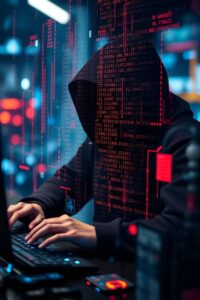
    THE HACKER IN THE CLASSROOM

    Facebook Twitter Pinterest LinkedIn Telegram Tumblr Email
    Share
    Facebook Twitter LinkedIn Pinterest Email

    Always remember, every locked door is eventually tested—not by criminals first, but often by the curious

    IN AN age where education has migrated from classrooms to servers, from answer sheets to databases, and from invigilators to algorithms, a fundamental question emerges: Who watches the digital gatekeepers?

    For generations, students were expected to solve problems designed by institutions. Today, a new generation has begun solving the institutions themselves.

    Recent events surrounding vulnerabilities in CBSE’s digital evaluation and re-evaluation systems have exposed an uncomfortable reality. The story is not merely about a student, a portal, or a cyber security flaw. It is about a collision between curiosity and authority, innovation and complacency, technology and trust. Reports suggest that students and ethical hackers identified weaknesses in systems that millions relied upon for something as crucial as examination results and answer-sheet access.

    The incident forces us to confront a difficult truth. We often celebrate digital transformation without questioning whether the foundations are strong enough to support it. We assume that because a system is online, it is secure. Because it is official, it is reliable. Because it is automated, it is accurate.

    Yet technology possesses no magical immunity against human oversight.

    The modern student has grown up in an ecosystem fundamentally different from that of previous generations. Armed with coding tutorials, cybersecurity forums, artificial intelligence tools, and unlimited access to information, today’s teenagers can investigate systems with a level of sophistication once reserved for professionals. The same internet that helps students prepare for examinations can also teach them how networks operate, how databases communicate, and where vulnerabilities hide.

    This is where the story becomes fascinating.

     ALSO READ

    THE SUBPOENAED TEXTBOOK

    Was the real surprise that vulnerabilities existed? Or was the real surprise that a student discovered them?

    For decades, institutions have measured intelligence through examinations, grades, and standardized assessments. Yet some of the most valuable skills of the digital age—critical thinking, pattern recognition, problem-solving, and technical curiosity—often emerge outside the prescribed syllabus.

    The hacker in the classroom challenges our conventional understanding of education. He forces us to ask whether learning is merely the ability to reproduce answers or the ability to question systems themselves.

    The internet has transformed students from consumers of information into investigators of information. They no longer simply accept what appears on a screen. They inspect it. Test it. Challenge it.

    And perhaps that is precisely what education was supposed to achieve.

    The lesson from this episode extends far beyond cybersecurity. Every institution entering the digital era must recognize a simple principle: technology does not eliminate accountability; it multiplies it. Every portal, every database, every algorithm carries with it a responsibility to safeguard trust.

    Because in the end, the most powerful examination is not the one students write.

    It is the one they unknowingly conduct on the systems built around them.

    Welcome to the digital classroom—where sometimes the student becomes the examiner.

    READ MORE

    VIRTUAL CRIMES

    Subscribe Us 

    Facebook Twitter Youtube

    We strive to make a lasting impact on India’s policy and planning landscape through fair, unbiased, and incisive research based journalism. 
    But we can’t do it alone.
    Together, we can create a better India, where policies are fair, planning is unbiased, and the truth prevails. Your contribution matters, and we shall be immensely grateful for your support.

    Support LegalMitra
    AI algorithms cyber security digital digital evaluation Technology
    Share. Facebook Twitter Pinterest LinkedIn Tumblr Email

    Related Posts

    THE DIGITAL ARREST

    July 17, 2026

    LOVE IN THE AGE OF AI

    July 17, 2026

    when TREES become CITIZENS

    July 17, 2026

    THE FEED That Never Let Go

    July 17, 2026

    China’s AI Judges Spark Debate Over the Future of Indian Courts

    July 4, 2026

    THE SUBPOENAED TEXTBOOK

    July 4, 2026
    Leave A Reply Cancel Reply

    Top Posts

    No Maintenance for Working Wife, Rules Supreme Court

    March 22, 2025344 Views

    The Fasli Year

    July 13, 2023272 Views

    HANUMAN’S JOURNEY OF GUIDANCE

    June 24, 2023165 Views
    Categories
    • Agastya Sharma (2)
    • August 2023 (19)
    • August 2024 (7)
    • Cover Story (22)
    • Cyber Crime (3)
    • Digital Classics (3)
    • Editorial (7)
    • Featured (61)
    • Featured Videos (3)
    • Feb-March 2024 (23)
    • Feb-March 2026 (3)
    • February 2024 (2)
    • Gadgets (1)
    • HOUMOUR (4)
    • International (14)
    • January 2024 (27)
    • June – July 2024 (38)
    • June 2025 (7)
    • June-2023 (10)
    • June-July 2026 (7)
    • Khushboo Sharma (2)
    • Latest in Tech (3)
    • Law Focus (15)
    • Law Medics (2)
    • Law Tech (8)
    • Law to Life (44)
    • Legal Desk (6)
    • Legal Mitra – E Magazine (1)
    • Maarisha Sharma (1)
    • March 2025 (11)
    • May-2023 (16)
    • Most Recent (146)
    • New Arrivals (69)
    • News (60)
    • November 2024 (6)
    • Oct-Nov 2025 (10)
    • October 2023 (8)
    • October 2024 (9)
    • riteBOL (97)
    • Ritesh Sharma, Editor (26)
    • Shipra Sharma (3)
    • Tech & Work (1)
    • Todays Picks (1)
    • Trending (6)
    • Uncategorized (5)
    • Women (8)
    Don't Miss

    Right to Work: Fundamental Right or Constitutional Aspiration?

    The Supreme Court has raised a larger constitutional question over whether the statutory right to…

    Police Cannot Investigate PCPNDT Act Offences

    August 21, 2026

    Right to Marry Is a Human Right

    August 21, 2026

    DOG EVIDENCE NOT ENOUGH

    July 17, 2026
    Stay In Touch
    • Facebook
    • YouTube
    • TikTok
    • WhatsApp
    • Twitter
    • Instagram
    Most Popular

    No Maintenance for Working Wife, Rules Supreme Court

    March 22, 2025344 Views

    The Fasli Year

    July 13, 2023272 Views

    HANUMAN’S JOURNEY OF GUIDANCE

    June 24, 2023165 Views
    Our Picks

    Right to Work: Fundamental Right or Constitutional Aspiration?

    August 21, 2026

    Police Cannot Investigate PCPNDT Act Offences

    August 21, 2026

    Right to Marry Is a Human Right

    August 21, 2026
    Legal Mitra
    Facebook X (Twitter) Instagram YouTube
    • Home
    • About Legal Mitra
    • Editorials
    • Article Categories
    • Contact Us
    © 2026 Legal Mitra. Designed by CREADIG.

    Type above and press Enter to search. Press Esc to cancel.

    Go to mobile version