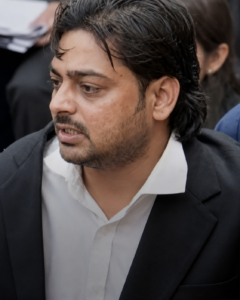
Two law students from Uttar Pradesh have been arrested for allegedly disrupting proceedings inside the Supreme Court, abusing the Chief Justice of India, throwing papers in the courtroom and manhandling security personnel. While declining contempt action, the Court described the incident as an act of frustration and urged restraint
Delhi Police have arrested two law students for allegedly creating a disturbance inside the Supreme Court by abusing the Chief Justice of India, throwing papers during a hearing and obstructing security personnel in the discharge of their duties.
The primary accused, Prabal Pratap Singh, a third-year LLB student from Lucknow University and a resident of Etawah, Uttar Pradesh, was taken into custody along with Chander Bhan, a second-year law student from Rae Bareli. Both have been booked on charges of disrupting court proceedings, obstructing a public servant and assaulting security personnel.
According to police, the incident occurred on July 10 when Prabal Pratap Singh appeared before the Supreme Court in person. During the hearing, he allegedly used abusive language against the Chief Justice of India, threw papers inside the courtroom and disrupted judicial proceedings.
When security personnel attempted to restore order, the accused allegedly pushed a security officer and resisted efforts to remove him from the courtroom.
Despite the incident, the Supreme Court declined to initiate contempt proceedings or any other coercive action. Observing that the accused appeared to be emotionally disturbed and acting out of frustration, the Court remarked that it had “only sympathies” for him.
Chief Justice of India Surya Kant later urged that the episode should not be sensationalised, stating that such incidents occasionally involve young people and should not detract from the dignity of constitutional institutions. The CJI emphasised that protecting the prestige and integrity of constitutional bodies remains a collective responsibility.
During the investigation, both accused underwent medical examination at the Institute of Human Behaviour and Allied Sciences (IHBAS), where doctors declared them mentally fit. Police also recovered pamphlets containing objectionable material from their possession.
The accused were produced before a Delhi court, which granted the police two days’ custody. Investigators are now examining whether the disruption was a spontaneous act or part of a pre-planned conspiracy.
The observations came while the Court examined issues relating to the implementation of the three-language policy. While acknowledging that the scheme seeks to promote Indian languages in line with the constitutional objective of encouraging their use in governance and public life, the Court indicated that the classification of English requires a more nuanced approach.
The Supreme Court noted that English has evolved into an integral part of India’s educational, judicial and administrative systems and has acquired a distinct place in the country’s linguistic landscape. Its widespread use across institutions and multiple States, the Bench observed, differentiates it from languages that have no comparable historical or functional presence in India.
The matter is expected to further examine the constitutional and policy implications of language classification within the framework of the National Education Policy and the CBSE’s three-language scheme.
We strive to make a lasting impact on India’s policy and planning landscape through fair, unbiased, and incisive research based journalism.
But we can’t do it alone.
Together, we can create a better India, where policies are fair, planning is unbiased, and the truth prevails. Your contribution matters, and we shall be immensely grateful for your support.
