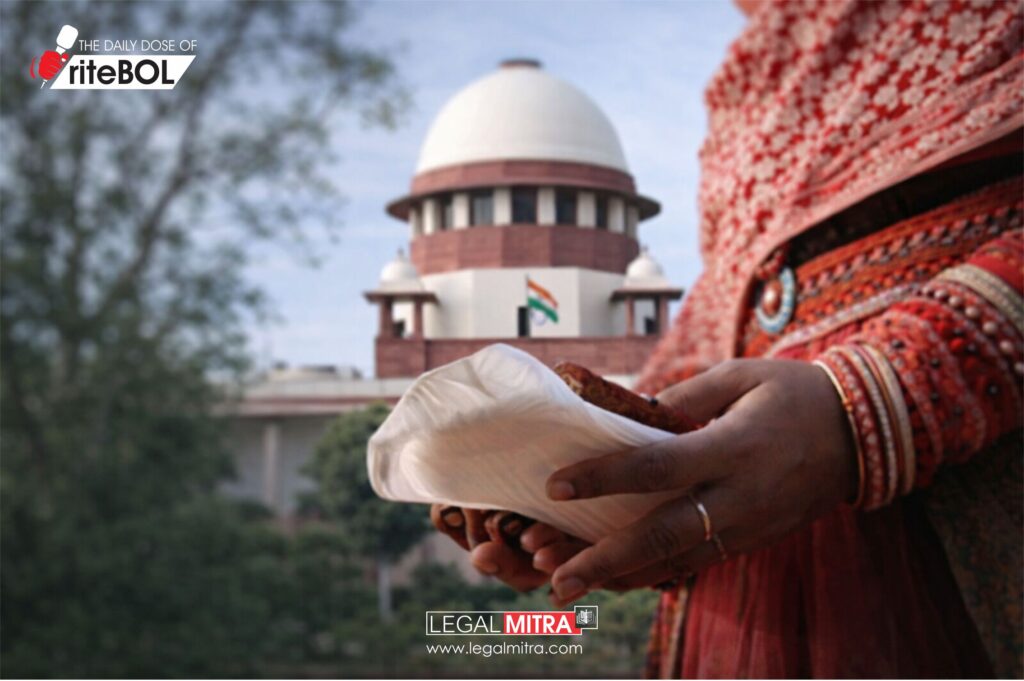
The Court directed state governments, schools, and colleges to promote awareness on menstrual health, ensure access to free sanitary products for girls, and provide functional, gender-segregated toilets in both public and private institutions. Educational institutions across urban and rural areas have also been asked to establish Menstrual Hygiene Management corners equipped with sanitary pads, spare uniforms, innerwear, and disposal facilities.
The ruling was delivered by a bench of Justices J.B. Pardiwala and R. Mahadevan while hearing a petition seeking free biodegradable sanitary napkins for girl students. The Court observed that lack of access to safe menstrual products results in “period poverty,” which contributes to school absenteeism, dropouts, and adverse health outcomes among girls and women.
Highlighting public health concerns, the Court noted that menstrual stigma and unhygienic practices can lead to infections, untreated gynecological conditions, and serious health risks. It also emphasised the need to eliminate social taboos by educating children — including boys — about the biological reality of menstruation.
The judgment underscores that menstrual health is not merely a welfare issue but a constitutional entitlement, while also stressing the need for broader social and cultural change to dismantle long-standing stigma surrounding menstruation.
We strive to make a lasting impact on India’s policy and planning landscape through fair, unbiased, and incisive research based journalism.
But we can’t do it alone.
Together, we can create a better India, where policies are fair, planning is unbiased, and the truth prevails. Your contribution matters, and we shall be immensely grateful for your support.

