


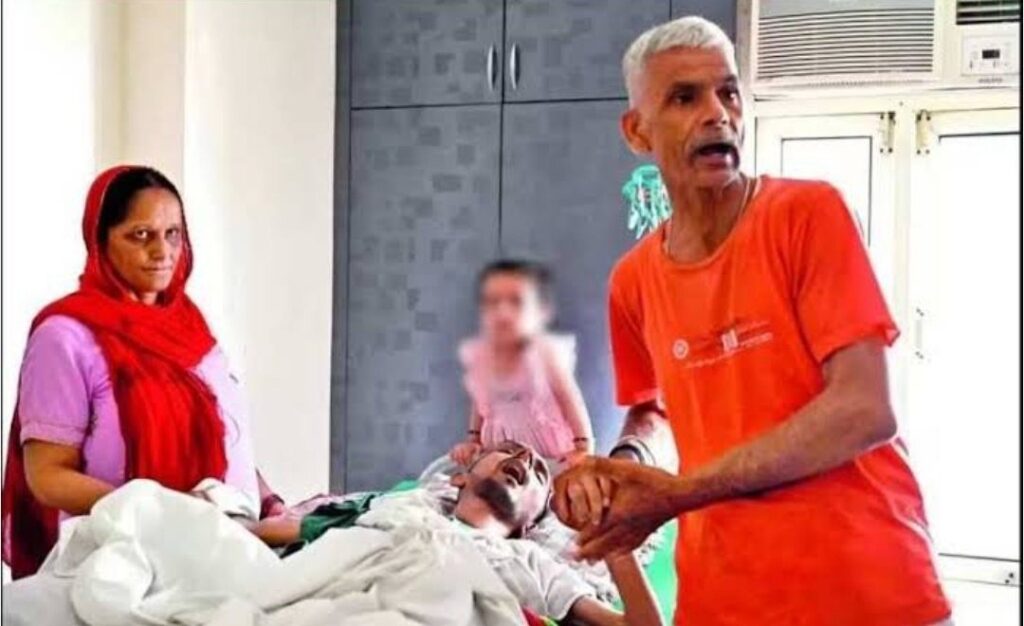

The case concerns Harish Rana, who suffered critical head injuries after falling from a fourth-floor balcony in 2013 while he was an engineering student at Punjab University in Chandigarh. Since the accident, Rana has remained in a comatose state with permanent brain damage and has required constant medical support.
The Supreme Court’s ruling marks the first instance in India where the withdrawal of life-sustaining treatment has been permitted through judicial approval in such circumstances. Passive euthanasia—the withdrawal or withholding of life-sustaining treatment—was recognised as legally permissible in India by the Supreme Court in 2018. However, active euthanasia, which involves deliberate actions to end a person’s life, remains illegal.
Over the years, Rana’s parents repeatedly approached the courts seeking permission to withdraw life support, stating that their son had shown no signs of recovery since the accident. They also told media outlets that they had exhausted their financial resources caring for him and were deeply concerned about his future if something were to happen to them.


Medical boards constituted to examine Rana’s condition informed the court that he had sustained irreversible brain damage and had negligible chances of recovery. They also reported that he required external assistance for feeding, as well as bladder and bowel functions, and had developed severe bed sores due to his prolonged condition.
Under the legal framework governing passive euthanasia and living wills in India, the withdrawal of life-sustaining treatment requires certification from two independent medical boards confirming that the patient meets the necessary criteria.
Taking these findings into account, the Supreme Court permitted the medical boards to exercise their clinical judgment regarding the withdrawal of treatment in Rana’s case.
The ruling has once again sparked discussion on the ethical and legal dimensions of passive euthanasia in India, particularly in situations where the patient has not executed a living will outlining their wishes for medical care in the event of a terminal or irreversible condition.