


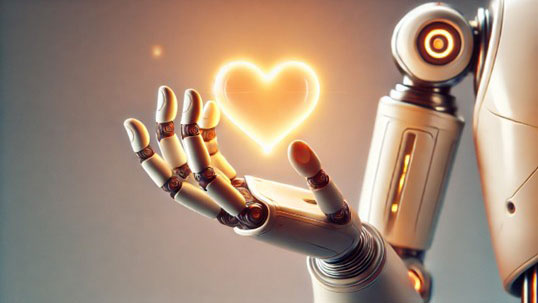


THE RISE of artificial intelligence has changed how people work, learn, and communicate. Now, it is beginning to reshape one of the most personal aspects of human life romantic relationships. Across dating plat-forms, users are increasingly relying on AI chatbots to draft opening messages, improve profiles, suggest conversation topics, and even interpret replies from potential partners. What was once a search for emotional compatibility is gradually becoming an exercise in technological optimisation.
For many users, AI offers practical benefits. It reduces the anxiety of initiating conversations, helps overcome writer’s block, and gives socially awkward individuals greater confidence in expressing themselves. In a world where first impressions are often formed through a few lines of text, AI appears to level the playing field by making communication easier and more polished.
However, this convenience comes with important ethical and emotional questions. Attraction is built not only on eloquence but also on authenticity. If an AI system composes messages, crafts witty responses, and shapes one’s online personality, is the connection being formed between two individuals or between two algorithms?
There is also the issue of transparency. Should people disclose that AI has written their messages? While using technology to correct grammar or improve clarity may be comparable to using a spell checker, allowing AI to conduct substantial portions of personal conversations enters ethically uncertain territory. Trust, once compromised, can be difficult to rebuild.
At the same time, dismissing AI entirely would ignore its genuine value. For individuals with social anxiety, language barriers, or communication challenges, AI can serve as a supportive tool rather than a substitute for personality. The distinction lies in whether technology assists commun-ication or replaces it.
The future of dating will undou-btedly include artificial intelligence. Yet technology should remain a facilitator not the author of human relationships. Love has always thrived on un-predictability, emotional honesty, and shared exper-iences. Those qualities cannot be automated.
As AI becomes a digital wingman for millions, society must ensure that convenience does not come at the cost of authenticity. In matters of the heart, the most meaningful conversations are still the ones that belong entirely to us.
