Close Menu
    What's Hot

    Right to Work: Fundamental Right or Constitutional Aspiration?

    August 21, 2026

    Police Cannot Investigate PCPNDT Act Offences

    August 21, 2026

    Right to Marry Is a Human Right

    August 21, 2026
    Facebook X (Twitter) Instagram
    Trending
    • Right to Work: Fundamental Right or Constitutional Aspiration?
    • Police Cannot Investigate PCPNDT Act Offences
    • Right to Marry Is a Human Right
    • DOG EVIDENCE NOT ENOUGH
    • RITUALS BEFORE REGISTRATION MATTER
    • THE DIGITAL ARREST
    • LOVE IN THE AGE OF AI
    • when TREES become CITIZENS
    Facebook X (Twitter) Instagram
    Legal MitraLegal Mitra
    Demo
    • Home
    • Editorials
    • Articles Category
      • Law Focus
      • Law to Life
      • Law Tech
      • Cover Story
      • HOUMOUR
      • Legal Desk
      • International
      • Matrimony
      • Women
      • Cyber Crime
    • Magazine Issues
    • Authors
    Legal MitraLegal Mitra
    Home » News » THE SUBPOENAED TEXTBOOK
    Featured

    THE SUBPOENAED TEXTBOOK

    When Court Backlogs Became Contraband
    Facebook Twitter Pinterest LinkedIn Telegram Tumblr Email
    Share
    Facebook Twitter LinkedIn Pinterest Email
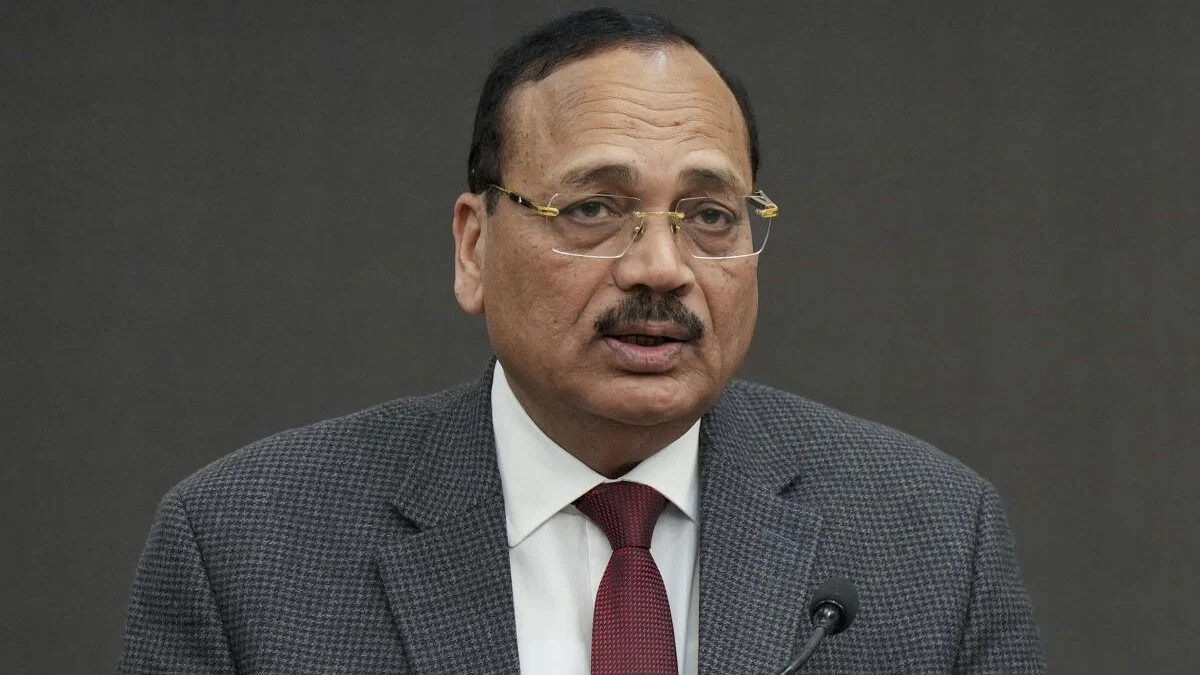
    Justice Surya Kant -Chief Justice of India

    “I will take up the matter suo motu. I will not allow anybody to defame the institution. Law will take its course.”
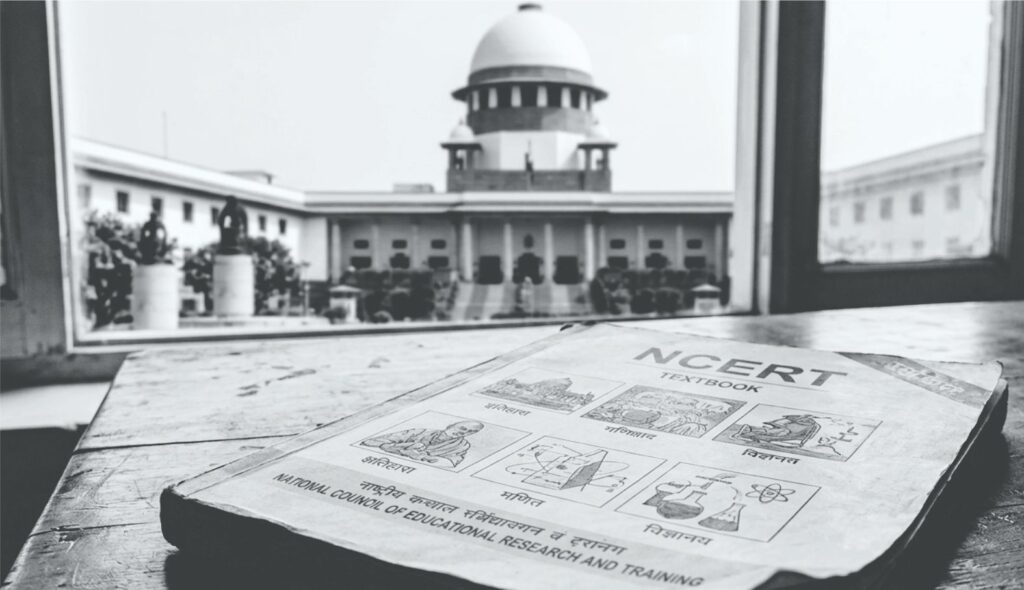
    THE LEGAL battle over institutional self-defense has now entered India’s classrooms. In a move that unsettled educators and academic circles alike, the Supreme Court recently blacklisted authors and penalized educational material—including NCERT-level content—that critically referenced judicial corruption and the massive backlog of pending cases. Reinforcing this approach, the apex court also rejected pleas seeking relaxed hate speech scrutiny, signaling that broad institutional criticism under the guise of academic freedom would not be tolerated.Lorem ipsum dolor sit amet, consectetur adipiscing elit. Ut elit tellus, luctus nec ullamcorper mattis, pulvinar dapibus leo.

    YOU CANNOT CURE A FEVER BY BREAKING THE THERMOMETER
    When millions of cases remain unresolved for years— sometimes decades—judicial backlog ceases to be an abstract academic concern. It becomes a lived national reality that students, citizens, and institutions alike cannot simply be asked to ignore.


    This raises a serious constitutional question: Where does legitimate public accountability end, and when does protecting the “majesty of the court” become censorship?
    To understand the judiciary’s defensive posture, one must recognize the fragile nature of judicial authority. Unlike the executive, courts command no army; unlike the legislature, they control no treasury. Their power rests almost entirely on public trust.
    From the bench’s perspective, textbooks portraying the legal system as endlessly delayed or structurally compromised may not encourage critical thinking, but public cynicism. If young citizens lose faith in the judiciary before they are even old enough to vote, the rule of law itself risks weakening. Seen this way, sweeping criticism of judicial integrity becomes more than academic commentary—it becomes a challenge to institutional legitimacy.
    Yet critics argue that suppressing discussions of judicial backlog amounts to censoring reality itself. “You cannot cure a fever by breaking the thermometer,” civil liberties advocates insist. When millions of cases remain unresolved for decades, backlog is no longer a theoretical issue; it is a lived national reality.
    Scholars and educators further contend that contempt powers were created to prevent obstruction of justice, not to shield institutions from uncomfortable facts. Once academic criticism is labeled “systemic vilification,” the danger is obvious: only praise may remain legally safe.
    At the heart of this debate lies the democratic tension between public accountability and institutional integrity—the right to question failures versus the need to preserve trust in constitutional institutions.
    The irony becomes sharper with the Supreme Court’s recent unveiling of a redesigned Nyay Devi, the Indian goddess of justice, without the traditional colonial blindfold. The symbolism was powerful: Indian justice is no longer blind to social realities.

    ALSO READ

    THE UNSTOPPABLE SPIRIT OF AMIR HUSSAIN LONE

    Yet the contradiction is difficult to ignore. The institution appears willing to see society’s realities, but increasingly uncomfortable when citizens openly discuss them.
    True judicial majesty is not protected through blacklists, syllabus edits, or intellectual intimidation. It is earned through transparency, efficiency, accountability, and the willingness to confront systemic shortcomings openly. If justice no longer needs a blindfold, perhaps its critics should not require a gag order either. 

    READ MORE

    VIRTUAL CRIMES

    Subscribe Us 

    Facebook Twitter Youtube

    We strive to make a lasting impact on India’s policy and planning landscape through fair, unbiased, and incisive research based journalism. 
    But we can’t do it alone.
    Together, we can create a better India, where policies are fair, planning is unbiased, and the truth prevails. Your contribution matters, and we shall be immensely grateful for your support.

    Support LegalMitra
    Chief Justice of India Justice Surya Kant NCERT suo motu
    Share. Facebook Twitter Pinterest LinkedIn Tumblr Email

    Related Posts

    THE DIGITAL ARREST

    July 17, 2026

    LOVE IN THE AGE OF AI

    July 17, 2026

    when TREES become CITIZENS

    July 17, 2026

    THE FEED That Never Let Go

    July 17, 2026

    THE HACKER IN THE CLASSROOM

    July 4, 2026

    China’s AI Judges Spark Debate Over the Future of Indian Courts

    July 4, 2026
    Leave A Reply Cancel Reply

    Top Posts

    No Maintenance for Working Wife, Rules Supreme Court

    March 22, 2025344 Views

    The Fasli Year

    July 13, 2023272 Views

    HANUMAN’S JOURNEY OF GUIDANCE

    June 24, 2023165 Views
    Categories
    • Agastya Sharma (2)
    • August 2023 (19)
    • August 2024 (7)
    • Cover Story (22)
    • Cyber Crime (3)
    • Digital Classics (3)
    • Editorial (7)
    • Featured (61)
    • Featured Videos (3)
    • Feb-March 2024 (23)
    • Feb-March 2026 (3)
    • February 2024 (2)
    • Gadgets (1)
    • HOUMOUR (4)
    • International (14)
    • January 2024 (27)
    • June – July 2024 (38)
    • June 2025 (7)
    • June-2023 (10)
    • June-July 2026 (7)
    • Khushboo Sharma (2)
    • Latest in Tech (3)
    • Law Focus (15)
    • Law Medics (2)
    • Law Tech (8)
    • Law to Life (44)
    • Legal Desk (6)
    • Legal Mitra – E Magazine (1)
    • Maarisha Sharma (1)
    • March 2025 (11)
    • May-2023 (16)
    • Most Recent (146)
    • New Arrivals (69)
    • News (60)
    • November 2024 (6)
    • Oct-Nov 2025 (10)
    • October 2023 (8)
    • October 2024 (9)
    • riteBOL (97)
    • Ritesh Sharma, Editor (26)
    • Shipra Sharma (3)
    • Tech & Work (1)
    • Todays Picks (1)
    • Trending (6)
    • Uncategorized (5)
    • Women (8)
    Don't Miss

    Right to Work: Fundamental Right or Constitutional Aspiration?

    The Supreme Court has raised a larger constitutional question over whether the statutory right to…

    Police Cannot Investigate PCPNDT Act Offences

    August 21, 2026

    Right to Marry Is a Human Right

    August 21, 2026

    DOG EVIDENCE NOT ENOUGH

    July 17, 2026
    Stay In Touch
    • Facebook
    • YouTube
    • TikTok
    • WhatsApp
    • Twitter
    • Instagram
    Most Popular

    No Maintenance for Working Wife, Rules Supreme Court

    March 22, 2025344 Views

    The Fasli Year

    July 13, 2023272 Views

    HANUMAN’S JOURNEY OF GUIDANCE

    June 24, 2023165 Views
    Our Picks

    Right to Work: Fundamental Right or Constitutional Aspiration?

    August 21, 2026

    Police Cannot Investigate PCPNDT Act Offences

    August 21, 2026

    Right to Marry Is a Human Right

    August 21, 2026
    Legal Mitra
    Facebook X (Twitter) Instagram YouTube
    • Home
    • About Legal Mitra
    • Editorials
    • Article Categories
    • Contact Us
    © 2026 Legal Mitra. Designed by CREADIG.

    Type above and press Enter to search. Press Esc to cancel.

    Go to mobile version