
Site icon Legal Mitra

“Chilling Effect” Concerns as Journalists and Activists Challenge New Privacy Law in Supreme Court

Journalists and transparency advocates have approached the Supreme Court of India to challenge recent amendments to the country’s transparency framework, warning that the changes could negatively impact accountability and investigative reporting.
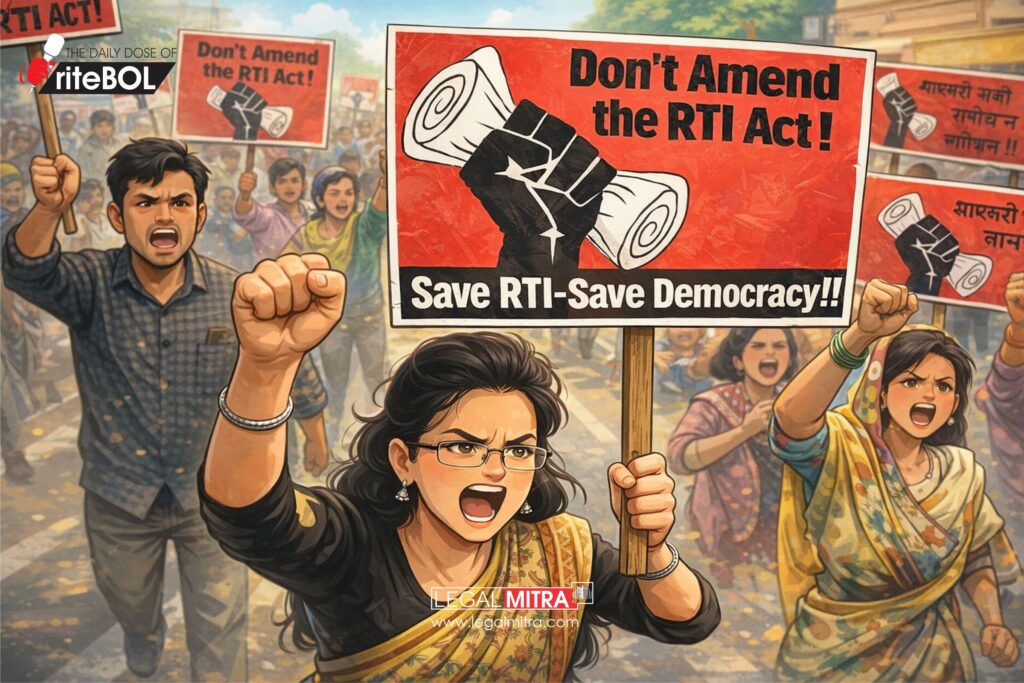
The petitioners are contesting modifications introduced by the government led by Prime Minister Narendra Modi, particularly those linked to the newly enacted privacy law. According to them, these changes weaken existing mechanisms that enable public access to information and could discourage critical journalism by creating a “chilling effect.”

At the center of the dispute are revisions to the Right to Information (RTI) framework, especially concerning the disclosure of “personal information.” Previously, such information could be released if it served a larger public interest. Critics argue that the updated provisions narrow this scope, making it more difficult to obtain important details.

Activists contend that these changes undermine the principles of participatory democracy by restricting access to information that is essential for public scrutiny. They warn that the law could be used to withhold key details, such as the identities of contractors or officials involved in controversial public projects.
The government, however, has defended the amendments, stating that they aim to balance citizens’ right to information with the right to privacy. IT Minister Ashwini Vaishnaw has emphasized that the framework continues to follow the principle of “maximum disclosure and minimum exemptions.”
Media organizations have also expressed concern about the broader implications of the law. Journalists argue that compliance requirements—such as obtaining consent for the use of personal data—could make investigative reporting significantly more difficult, particularly when subjects are unwilling to cooperate.
The Editors Guild of India has cautioned that the legislation may hinder newsgathering activities. Similarly, journalist groups, including The Reporters’ Collective, have warned that the risk of substantial financial penalties could encourage self-censorship among reporters as well as the public.
Additionally, India’s declining position in global transparency rankings has been cited as a related concern. Critics attribute this trend to increasing restrictions and exemptions within the RTI system.
The Supreme Court is expected to hear several petitions on the matter in the near future.

We strive to make a lasting impact on India’s policy and planning landscape through fair, unbiased, and incisive research based journalism. 
But we can’t do it alone.
Together, we can create a better India, where policies are fair, planning is unbiased, and the truth prevails. Your contribution matters, and we shall be immensely grateful for your support.

Exit mobile version