


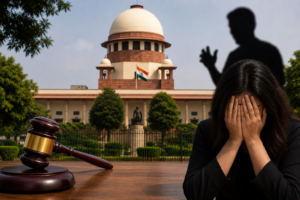
 The Supreme Court has expressed concern over recurring judicial approaches in sexual offence cases after the Patna High Court ruled that removing a woman’s salwar and pressing her breasts did not constitute an attempt to rape. Stressing the need for judicial sensitivity, the apex court has directed all courts and police authorities to follow nationally prescribed guidelines while dealing with such cases.
he Supreme Court has raised serious concerns over judicial handling of sexual offence cases following a Patna High Court judgment that held removing a woman’s salwar and pressing her breasts did not amount to an attempt to rape. The apex court underscored the need for greater judicial sensitivity and directed that the National Judicial Academy Committee’s report on adjudicating sexual offence cases be uploaded on the websites of the Supreme Court and all High Courts.
The report was prepared in the suo motu proceedings initiated after the Allahabad High Court’s controversial March 17, 2025 order, which had observed that pulling a minor girl’s pyjama string and grabbing her breasts did not constitute an attempt to rape. The Supreme Court had subsequently overturned that view and ordered sensitisation of judges dealing with such offences.
During the hearing, senior advocate Shobha Gupta informed the bench that similar judicial reasoning continued to surface, citing the Patna High Court’s July 9 judgment. Justice V. Mohan questioned whether the Supreme Court’s earlier ruling and directions on judicial sensitisation had been cited before the Patna High Court.