

Close Menu
    What's Hot

    SC Says Show Humanity, Bring Her Back from Bangladesh

    December 3, 2025

    Supreme Court Draws a Hard Line on Illegal Immigration

    December 3, 2025

    GAME OF BANS

    October 25, 2025
    Facebook X (Twitter) Instagram
    Trending
    • SC Says Show Humanity, Bring Her Back from Bangladesh
    • Supreme Court Draws a Hard Line on Illegal Immigration
    • GAME OF BANS
    • THE E-WILL
    • NO PUB, CONCERTS AND FOOTBALL
    • JUDGE FRANK CAPRIO
    • WHEN FREEDOM HAS A PRICE TAG
    • Linguistic Challenges
    Facebook X (Twitter) Instagram
    Legal MitraLegal Mitra
    Demo
    • Home
    • Editorials
    • Articles Category
      • Law Focus
      • Law to Life
      • Law Tech
      • Cover Story
      • HOUMOUR
      • Legal Desk
      • International
      • Matrimony
      • Women
      • Cyber Crime
    • Magazine Issues
    • Authors
    Legal MitraLegal Mitra
    Home » News » GAME OF BANS
    Featured

    GAME OF BANS

    Facebook Twitter Pinterest LinkedIn Telegram Tumblr Email
    Share
    Facebook Twitter LinkedIn Pinterest Email
    History shows bans don’t kill gambling they just drive it underground. India’s online money gaming ban risks losing revenue, oversight, and players to of shore syndicates
    Ritesh Sharma
    editor

    INDIA is a gaming enthusiast and a gaming enthusiast with an appetite for commitment. Almost one in five gamers across the globe is Indian, but India accounts for only a paltry 2% of total gaming revenues globally. Why is there a disconnect? Because whereas the world else spends billions on such blockbuster console games, cinematic PC epics, and vast open-world odysseys, India’s gameworld is fueled virtually on a different turbocharged fuel: online money gaming (OMG).
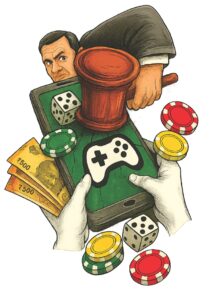
    Think fantasy cricket leagues, rummy tables, poker apps, and card-sharking platforms that never sleep. These aren’t the side alleys of the gaming economy — they are the main street. In 2024 alone, OMGs generated a staggering ₹27,000 crore of India’s ₹31,000 crore gaming market. Globally, money games account for about 40% of revenues. Here? They hog a jaw-dropping 85%. We are not a Mario-and-Minecraft country; we are a country shuffling cards, dreaming up teams, and betting limits. Sometimes with pocket money, sometimes  horribly with lives.

    THE BAN BLUFF: Mirage or medicine?

    Confronted with dark headlines — young men drowning in debt, families shattered by suicides in Tamil Nadu and Karnataka — governments have moved quickly for the crudest policy instrument: the ban hammer. Ban the apps, the reasoning goes, and suddenly problem vanishes.

    But prohibitions, history teaches, are like slot machines that dispense jackpots: they seldom pay out. Recall America’s 1920s alcohol prohibition? Far from sobering the country, it gave rise to bootleggers, speakeasies, and Al Capone’s empire. India’s own prohibition states did not choke off thirst — they bred liquor mafias. Earlier still, China’s teenage gaming curfews became a VPN-fest, with adolescents evading firewalls like experts.

    Lesson? Prohibit what people desire, and you do not assassinate demand — you banish it to the underworld, where it prospers unregulated, untaxed, and uncontrolled. Use this against OMGs, and the narrative unfolds by itself. Already, India loses close to $4 billion a year in GST collections to offshore betting titans. Enforcement authorities are pursuing 642 such illegal operators. Prohibit local platforms, and you merely give our gamers to global crooks on a silver platter.

    In the pre-digital era, lottery bans gave rise to illegal satta markets. Today, app bans drive users to offshore platforms with zero consumer protection. The real losers are not the gamblers but the system meant to regulate them.

    A ban does not end a game. It merely switches the referee.

    India isn’t a Mario-and-Mine craft nation; it’s a rummy-table republic. With 85% of our gaming market fueled by online money games, bans won’t end the play they’ll just push it underground. The real win lies in regulation, not prohibition

    LEGAL PERSPECTIVE:

    It is pertinent to note that any attempt to impose a complete prohibition on online money gaming must withstand the test of Article 19(1)(g) of the Constitution, which guarantees the right to practice any profession, or to carry on any occupation, trade or business. The Supreme Court has repeatedly held that while the State may impose reasonable restrictions under Article 19(6), a blanket ban, without proportional justification, risks being struck down as unconstitutional.

    THE REAL STAKES: High Rollers, Higher Risks

    Here’s the surprise: the typical Indian OMG user is not some irresponsible high-roller. Official data indicates 73% of them earn less than Rs 3.5 lakh a year, and their annual spend averages a mere Rs 44. That’s less than the cost of a cinema ticket or two street-side samosa meals.  

    ALSO READ

    THE UNSTOPPABLE SPIRIT OF AMIR HUSSAIN LONE

    For most, OMG is an inexpensive thrill — and not a money pit.

    The true menace lies in the weak link: those who bet everything, pursuing losses into debt, until it turns to desperation. For them, the game can become disastrous, even deadly. Then there is the report of ₹4,000 crore laundered in foreign lands using gaming sites, and now the stakes are bigger than a Vegas high-roller poker evening.

    But here’s the bitter irony: prohibition of platforms does not cure addiction or end money laundering. It only gives up control, tax revenues, and consumer protection. The government loses sight, families lose protection, and criminal cartels have a free-for-all. Prohibition is not policy — it’s surrender.

    STATUTORY ANGLE

    The issue also falls within the ambit of Prevention of Money Laundering Act, 2002 (PMLA) and Foreign Exchange Management Act, 1999 (FEMA), since several reports indicate routing of funds through offshore gaming operators. Section 3 of PMLA criminalises the concealment, possession, acquisition, or use of proceeds of crime, while FEMA restricts cross-border transfer of unaccounted capital. Thus, unregulated OMG platforms are not merely social hazards but also potential economic offences.

    The Rs 4 Billion Jackpot Lost
    India has nearly 488 million gamers, but contributes a meagre 2% to global gaming revenues. Why? Because while the world plays consoles, India bets online. The real sting: the government loses close to $4 billion in GST annually to offshore operators, even as official OMG spend averages less than a cinema ticket per year. In 2024, Rs. 27,000 crore of Rs. 31,000 crore came from money games. Regulation could capture billions, protect families, and throttle laundering. Ban them, and India hands its gamers and their rupees to underground syndicates. In gaming, as in policy, the house always wins.
    SHUFFLE, DON’T SHACKLE: How to Fix the Game

    So what’s the clever play? Not nuking the table, but repairing the rules. India does not require bans; it requires regulation with teeth. Other countries have already demonstrated how to strike a balance between liberty and liability.

    Spending Caps: Deposit limits daily or monthly serve as a digital wallet breathalyzer. You cannot spend what you cannot deposit.

    Skill vs. Luck: Draw sharp legal distinctions. Fantasy cricket? Strategy and numbers. Roulette? Blind luck. Tax and license accordingly.

    Audits & Compulsory Disclosures: Compel platforms to print transaction records. Openness chokes laundering before it infects.

    Deposit Limits & Frequency Limits: Push players back to their senses. Keep entertainment running, keep lives from overflowing.


    These are not buzzkills. They are lifelines. The UK and Australia used such guardrails to establish billion-dollar industries that are both profitable and relatively secure. India, with its digitally native kids, can lead Asia if it adopts the same pragmatism.

    REGULATORY OUTLOOK

    IT Act, 2000: Already provides mechanisms to regulate intermediaries and digital businesses; a sector-specific carve-out for online gaming can be integrated.

    International Models: The UK’s Gambling Act (2005) created a licensing framework balancing freedom and protection.

    Judicial Precedents: The Supreme Court in K.R. Lakshmanan v. State of Tamil Nadu (1996) held that games involving substantial skill cannot be equated with gambling. Indian regulators can borrow this doctrine to draw sharper lines between permissible and impermissible activities.

    BEYOND THE APPS: A Cultural Crossroad

    India’s OMG controversy is not only about rummy games and cricket championships. It is a reflection of how a young, mobile-first country balances freedom and security in the digital age. With 580 million players, the smartphone is our console, the wallet our joystick, and the stakes are excruciatingly real.

    And let’s not forget games of chance are in India’s cultural DNA. From the Mahabharata’s deadly dice game to Diwali card parties, we’ve danced with luck for long. We don’t game; we gamble. That instinct won’t go away with a government notice.

    So the question is not whether Indians will play. They are already playing. The question is: will they play in the open, regulated framework, or in the shadows at the mercy of mafias and offshore sharks?

    THE ENDGAME: House Always Wins?

    Prohibition appears to be control, but promises the contrary. The actual jackpot is not in banning OMGs, but in keeping them on the table a fair game, legally taxed, responsibly refereed. Intelligent regulations have the ability to shield the vulnerable, retain revenue locally, and keep the crime syndicates in check.

    Because here’s the harsh reality: prohibiting OMGs will not deter the gambling. It’ll only determine who takes home the spoils. And unless India gets its rules in order now, the house either offshore or underground always will.     

    READ MORE

    VIRTUAL CRIMES

    Subscribe Us 

    Facebook Twitter Youtube

    We strive to make a lasting impact on India’s policy and planning landscape through fair, unbiased, and incisive research based journalism. 
    But we can’t do it alone.
    Together, we can create a better India, where policies are fair, planning is unbiased, and the truth prevails. Your contribution matters, and we shall be immensely grateful for your support.

    Support LegalMitra
    Gambling game world India online money gaming
    Share. Facebook Twitter Pinterest LinkedIn Tumblr Email

    Related Posts

    THE E-WILL

    October 25, 2025

    NO PUB, CONCERTS AND FOOTBALL

    October 25, 2025

    JUDGE FRANK CAPRIO

    October 25, 2025

    WHEN FREEDOM HAS A PRICE TAG

    October 25, 2025

    Linguistic Challenges

    October 25, 2025

    FROM QUEUES TO CLICKS

    October 14, 2025
    Leave A Reply Cancel Reply

    Top Posts

    The Fasli Year

    July 13, 2023198 Views

    HANUMAN’S JOURNEY OF GUIDANCE

    June 24, 2023156 Views

    No Maintenance for Working Wife, Rules Supreme Court

    March 22, 2025150 Views
    Categories
    • Agastya Sharma (2)
    • August 2023 (19)
    • August 2024 (7)
    • Cover Story (22)
    • Cyber Crime (3)
    • Digital Classics (3)
    • Editorial (6)
    • Featured (54)
    • Featured Videos (3)
    • Feb-March 2024 (23)
    • February 2024 (2)
    • Gadgets (1)
    • HOUMOUR (4)
    • International (11)
    • January 2024 (27)
    • June – July 2024 (38)
    • June 2025 (7)
    • June-2023 (10)
    • Khushboo Sharma (2)
    • Latest in Tech (3)
    • Law Focus (15)
    • Law Medics (2)
    • Law Tech (8)
    • Law to Life (44)
    • Legal Desk (6)
    • Legal Mitra – E Magazine (1)
    • Maarisha Sharma (1)
    • March 2025 (11)
    • May-2023 (16)
    • Most Recent (110)
    • New Arrivals (66)
    • News (58)
    • November 2024 (6)
    • Oct-Nov 2025 (10)
    • October 2023 (8)
    • October 2024 (9)
    • riteBOL (95)
    • Ritesh Sharma, Editor (26)
    • Shipra Sharma (3)
    • Tech & Work (1)
    • Todays Picks (1)
    • Trending (6)
    • Uncategorized (5)
    • Women (8)
    Don't Miss

    SC Says Show Humanity, Bring Her Back from Bangladesh

    The Court orders the return of a pregnant woman deported to Bangladesh, reminding the…

    Supreme Court Draws a Hard Line on Illegal Immigration

    December 3, 2025

    GAME OF BANS

    October 25, 2025

    THE E-WILL

    October 25, 2025
    Stay In Touch
    • Facebook
    • YouTube
    • TikTok
    • WhatsApp
    • Twitter
    • Instagram
    Most Popular

    The Fasli Year

    July 13, 2023198 Views

    HANUMAN’S JOURNEY OF GUIDANCE

    June 24, 2023156 Views

    No Maintenance for Working Wife, Rules Supreme Court

    March 22, 2025150 Views
    Our Picks

    SC Says Show Humanity, Bring Her Back from Bangladesh

    December 3, 2025

    Supreme Court Draws a Hard Line on Illegal Immigration

    December 3, 2025

    GAME OF BANS

    October 25, 2025
    Legal Mitra
    Facebook X (Twitter) Instagram YouTube
    • Home
    • About Legal Mitra
    • Editorials
    • Article Categories
    • Contact Us
    © 2025 Legal Mitra. Designed by CREADIG.

    Type above and press Enter to search. Press Esc to cancel.

    Go to mobile version