
Close Menu
    What's Hot

    SC Says Show Humanity, Bring Her Back from Bangladesh

    December 3, 2025

    Supreme Court Draws a Hard Line on Illegal Immigration

    December 3, 2025

    GAME OF BANS

    October 25, 2025
    Facebook X (Twitter) Instagram
    Trending
    • SC Says Show Humanity, Bring Her Back from Bangladesh
    • Supreme Court Draws a Hard Line on Illegal Immigration
    • GAME OF BANS
    • THE E-WILL
    • NO PUB, CONCERTS AND FOOTBALL
    • JUDGE FRANK CAPRIO
    • WHEN FREEDOM HAS A PRICE TAG
    • Linguistic Challenges
    Facebook X (Twitter) Instagram
    Legal MitraLegal Mitra
    Demo
    • Home
    • Editorials
    • Articles Category
      • Law Focus
      • Law to Life
      • Law Tech
      • Cover Story
      • HOUMOUR
      • Legal Desk
      • International
      • Matrimony
      • Women
      • Cyber Crime
    • Magazine Issues
    • Authors
    Legal MitraLegal Mitra
    Home » News » Linguistic Challenges
    Featured

    Linguistic Challenges

    Facebook Twitter Pinterest LinkedIn Telegram Tumblr Email
    Share
    Facebook Twitter LinkedIn Pinterest Email
    Today, India's 28 states and 8 union territories face ongoing demands for new states, often tied to linguistic or cultural identities.
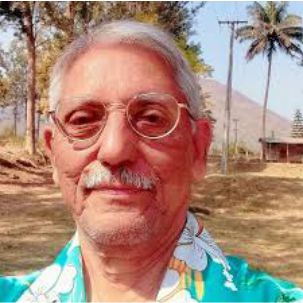
    Brij Khandelwal

    Revisiting the 1956 States Reorganisation and India’s Unity

    VISITING a small town in Tamil Nadu recently, I felt like a stranger in my own country. The ticket clerk at the railway station couldn’t understand my language, the road signs were in an unfamiliar script, and locals regarded me with curiosity.

    This experience underscores a persistent challenge in independent India: linguistic alienation.

    In retrospect, it can be claimed that this issue stems from a crucial decision in 1956, when Pandit Nehru’s government, responding to political pressures, reorganized states primarily along linguistic lines—a choice that has fueled division despite its intent to unify.

    India’s celebrated “unity in diversity” often masks the struggles of linguistic diversity. Even 75 years after independence, the absence of a consensus on a ‘national language’ has allowed regional linguistic movements to deepen social divides and fuel political tensions in many states.

    The States Reorganisation Commission (SRC), established in 1953, initially explored organizing states based on geography, resources, and administrative efficiency. However, intense public and political demands, such as the Andhra movement for Telugu speakers and the Samyukta Maharashtra agitation, led Nehru’s government to prioritize linguistic identity in the 1956 States Reorganisation Act.

    Prominent thinkers like Dr. B.R. Ambedkar, Sardar K.M. Panikkar, Acharya Kripalani, Kaka Kalelkar, and Dr. Ram Manohar Lohia cautioned that linguistic states could fragment national unity. Their warnings were largely overlooked, setting the stage for ongoing challenges.

    The consequences of this decision are evident:

    In 1965, anti-Hindi protests in Tamil Nadu turned violent, with dozens of deaths, including a few cases of self-immolation, as Tamils resisted the perceived imposition of Hindi as the sole official language. The Karnataka Maharashtra border dispute over Belagavi, a Marathi-speaking city assigned to Karnataka, remains unresolved, with tensions persisting as of 2025.The Assam Movement (1979–1985) and Assamese–Bengali conflicts led to significant violence, including the 1983 Nellie Massacre, which killed over 2,000 people, and displaced hundreds of thousands.

    The Punjabi Suba movement, which achieved a Punjabi-speaking state in 1966, contributed indirectly to later tensions, though the Khalistan movement of the 1980s was driven more by religious and political grievances than language alone.

    Linguistic disputes continue to shape contemporary India. Competitive exams like NEET and UPSC face allegations of language-based inequality, particularly in Tamil Nadu. The three-language formula, promoting Hindi, English, and a regional language, is criticized in Tamil Nadu and Karnataka as “linguistic imperialism.”

    ALSO READ

    THE UNSTOPPABLE SPIRIT OF AMIR HUSSAIN LONE

    In Bengaluru, incidents like the 2017 removal of Hindi signboards highlight local resistance. In Nagaland and Manipur, demands for recognition of local languages create friction with the central government.

    Other nations offer alternative models. Switzerland, with four official languages, organizes its cantons based on geography and history, not language. Singapore recognizes four languages but uses English for governance, proving that cultural identity can thrive without linguistic divisions.

    In contrast, India’s linguistic states have often turned language into a tool for political mobilization.

    Today, India’s 28 states and 8 union territories face ongoing demands for new states, often tied to linguistic or cultural identities.

    Digital connectivity and AI translation tools, like India’s Bhashini platform, have reduced communication barriers, suggesting that linguistic divides need not dictate administrative boundaries. This technological shift prompts a reevaluation of how states are organized.

    I propose a new State Reorganisation Commission to recommend state boundaries based on population, geography, and resources, rather than language. Regional languages should be celebrated in cultural and social spheres but not define governance or politics.

    While the 1956 reorganization aimed to accommodate linguistic diversity, it has, in some cases, entrenched division.

    A new approach could prioritize administrative efficiency and national cohesion, ensuring language remains a source of pride rather than conflict. By rethinking state boundaries, India can strengthen its “unity in diversity,” transforming language into a cultural asset rather than a wedge driving division.  

    READ MORE

    VIRTUAL CRIMES

    Subscribe Us 

    Facebook Twitter Youtube

    We strive to make a lasting impact on India’s policy and planning landscape through fair, unbiased, and incisive research based journalism. 
    But we can’t do it alone.
    Together, we can create a better India, where policies are fair, planning is unbiased, and the truth prevails. Your contribution matters, and we shall be immensely grateful for your support.

    Support LegalMitra
    Acharya Kripalani and Dr. Ram Manohar Lohia Dr. B.R. Ambedkar Kaka Kalelkar linguistic alienation Sardar K.M. Panikkar States Reorganisation Commission
    Share. Facebook Twitter Pinterest LinkedIn Tumblr Email

    Related Posts

    GAME OF BANS

    October 25, 2025

    THE E-WILL

    October 25, 2025

    NO PUB, CONCERTS AND FOOTBALL

    October 25, 2025

    JUDGE FRANK CAPRIO

    October 25, 2025

    WHEN FREEDOM HAS A PRICE TAG

    October 25, 2025

    FROM QUEUES TO CLICKS

    October 14, 2025
    Leave A Reply Cancel Reply

    Top Posts

    The Fasli Year

    July 13, 2023198 Views

    HANUMAN’S JOURNEY OF GUIDANCE

    June 24, 2023156 Views

    No Maintenance for Working Wife, Rules Supreme Court

    March 22, 2025150 Views
    Categories
    • Agastya Sharma (2)
    • August 2023 (19)
    • August 2024 (7)
    • Cover Story (22)
    • Cyber Crime (3)
    • Digital Classics (3)
    • Editorial (6)
    • Featured (54)
    • Featured Videos (3)
    • Feb-March 2024 (23)
    • February 2024 (2)
    • Gadgets (1)
    • HOUMOUR (4)
    • International (11)
    • January 2024 (27)
    • June – July 2024 (38)
    • June 2025 (7)
    • June-2023 (10)
    • Khushboo Sharma (2)
    • Latest in Tech (3)
    • Law Focus (15)
    • Law Medics (2)
    • Law Tech (8)
    • Law to Life (44)
    • Legal Desk (6)
    • Legal Mitra – E Magazine (1)
    • Maarisha Sharma (1)
    • March 2025 (11)
    • May-2023 (16)
    • Most Recent (110)
    • New Arrivals (66)
    • News (58)
    • November 2024 (6)
    • Oct-Nov 2025 (10)
    • October 2023 (8)
    • October 2024 (9)
    • riteBOL (95)
    • Ritesh Sharma, Editor (26)
    • Shipra Sharma (3)
    • Tech & Work (1)
    • Todays Picks (1)
    • Trending (6)
    • Uncategorized (5)
    • Women (8)
    Don't Miss

    SC Says Show Humanity, Bring Her Back from Bangladesh

    The Court orders the return of a pregnant woman deported to Bangladesh, reminding the…

    Supreme Court Draws a Hard Line on Illegal Immigration

    December 3, 2025

    GAME OF BANS

    October 25, 2025

    THE E-WILL

    October 25, 2025
    Stay In Touch
    • Facebook
    • YouTube
    • TikTok
    • WhatsApp
    • Twitter
    • Instagram
    Most Popular

    The Fasli Year

    July 13, 2023198 Views

    HANUMAN’S JOURNEY OF GUIDANCE

    June 24, 2023156 Views

    No Maintenance for Working Wife, Rules Supreme Court

    March 22, 2025150 Views
    Our Picks

    SC Says Show Humanity, Bring Her Back from Bangladesh

    December 3, 2025

    Supreme Court Draws a Hard Line on Illegal Immigration

    December 3, 2025

    GAME OF BANS

    October 25, 2025
    Legal Mitra
    Facebook X (Twitter) Instagram YouTube
    • Home
    • About Legal Mitra
    • Editorials
    • Article Categories
    • Contact Us
    © 2025 Legal Mitra. Designed by CREADIG.

    Type above and press Enter to search. Press Esc to cancel.

    Go to mobile version